Bloodborne Lore Explained: Understanding the Great Ones and the Nightmare
From the haunting streets of Yharnam to the twisted dreamscapes of the Nightmare realms, Bloodborne weaves one of the most intricate and cryptic stories in gaming history. Beneath the surface of its gothic architecture and relentless combat lies a tale of cosmic beings, forbidden knowledge, and humanity’s tragic attempt to ascend beyond its limits.
Bloodborne’s lore stand the Great Ones—eldritch entities whose power and presence shape every corner of the game’s world. These godlike beings exist beyond human comprehension, influencing dreams, birthing nightmares, and warping the nature of reality itself. Understanding the Great Ones means understanding Bloodborne’s deepest truths—its connection to the Nightmare, the Healing Church, and the fate of every hunter.
Who Are The Great Ones?
The Great Ones are Bloodborne’s version of Lovecraftian gods—transcendent, alien beings who exist on higher planes of reality. They are not inherently evil, but their motives are incomprehensible to humans. To mortals, their influence manifests as madness, mutation, or divine inspiration.
Origins of the Great Ones
The Great Ones are believed to have existed long before humanity. The Pthumerians, an ancient civilization, first encountered them in the labyrinths beneath Yharnam. Through communion and blood rituals, the Pthumerians became the first humans to interact with the Great Ones, worshipping them as gods. This communion gave rise to the concept of Insight—awareness of the eldritch truth that lies beyond perception.
Notable Great Ones
- Ebrietas, Daughter of the Cosmos – Found in the Upper Cathedral Ward, Ebrietas is one of the few Great Ones who remains accessible to humanity. She represents the Healing Church’s attempt to recreate divine contact.
- Mergo and Mergo’s Wet Nurse – Central to the game’s lore, Mergo is an infant Great One born from the union of Queen Yharnam and an eldritch being. The Wet Nurse, its guardian, represents the horrors of unnatural birth and divine protection.
- Moon Presence – The being behind the Hunter’s Dream and the true master of Gehrman. It binds hunters to an endless cycle of killing beasts in its own distorted reality.
- Amygdala – Towering Great Ones seen clinging to buildings and cathedrals. Amygdalas represent the omnipresence of the divine—visible only to those with enough Insight.
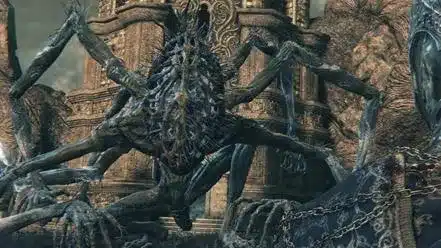
- Rom, the Vacuous Spider – A once-human scholar transformed into a Great One by the powers of the cosmos. Rom acts as a barrier between the waking world and the eldritch truth, concealing the horrors from ordinary mortals.
Each Great One embodies a theme—knowledge, transformation, motherhood, or ascension—and together they define the central narrative of Bloodborne: mankind’s pursuit of godhood through forbidden knowledge.
The Nightmare Realms Explained
Nightmares in Bloodborne are not dreams in the ordinary sense; they are alternate realities crafted or influenced by the Great Ones. These realms serve as prisons, sanctuaries, or echoes of past tragedies, and they exist parallel to the physical world.
The Hunter’s Dream
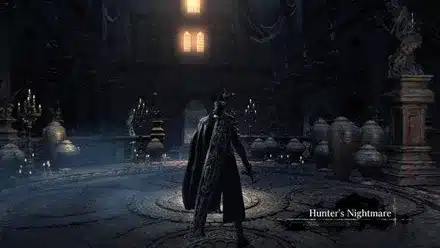
The Hunter’s Dream is the player’s home base and the most stable of these realms. Created by the Moon Presence, it exists to trap hunters in an eternal loop of service. Gehrman, the First Hunter, is bound there as its caretaker—a slave to the will of the Great One.
The Nightmare Frontier
This grotesque, twisted landscape filled with malformed creatures represents the collapse of reason under cosmic influence. It’s the physical manifestation of what happens when human minds break under the burden of forbidden knowledge.
Nightmare of Mensis
One of the most critical dreamscapes, the Nightmare of Mensis houses the scholars who sought communion with the Great Ones. Their experiments led to disaster—eyes, madness, and transformation dominate this world. The nightmare persists as a monument to their failure, guarded by the monstrous Mergo’s Wet Nurse.
The School of Mensis Connection
Mensis scholars tried to establish direct communication with the Great Ones using ritual blood and infant surrogates. Their obsession led them into the Nightmare, suggesting that the more one seeks to commune with the Great Ones, the deeper one is pulled into the dreamscape.
In Bloodborne, the Nightmare is both literal and symbolic—a reflection of the human psyche consumed by its ambition to reach the divine.
Relation Between the Church & the Great Ones
The Healing Church plays a pivotal role in connecting the Great Ones to humanity. Founded on the discovery of Old Blood, the Church used this miraculous substance to heal diseases and enhance human life—but it came from Ebrietas, a Great One.
The Origin of Blood Ministration
What began as a holy ritual soon became a curse. The Old Blood, while powerful, carried the taint of the Great Ones, transforming users into beasts. The Church concealed this truth, forming multiple branches to study, contain, and exploit the phenomenon:
- The Choir sought divine communion with the Great Ones.
- The School of Mensis delved into the Nightmare for contact and ascension.
- The Healing Church Hunters tried to cleanse the world of their own mistakes through bloodshed.
The Irony of Ascension
The Church’s goal was to ascend humanity by mimicking the Great Ones—often through creating infant surrogates and performing blood rituals. However, their efforts only led to madness, nightmares, and beastly corruption. The very blood that was meant to heal became the vector of humanity’s downfall.
NPCs Tied to the Lore
Many of Bloodborne’s NPCs embody fragments of its greater cosmic story. Their fates reflect the consequences of human contact with eldritch forces.
- Gehrman, the First Hunter – Once a mentor and hero, Gehrman becomes the prisoner of the Hunter’s Dream. Bound by the Moon Presence, he exists to train new hunters and maintain the endless cycle of death.
- Lady Maria of the Astral Clocktower – A disciple of Gehrman, Maria’s guilt over the atrocities at the Fishing Hamlet drives her to take her own life. In the Nightmare, she remains as a guardian, symbolizing humanity’s remorse for its sins.
- Micolash, Host of the Nightmare – The deranged leader of the School of Mensis, trapped eternally in his own creation. His madness stems from a failed attempt to communicate with the Great Ones.
- Arianna, the Blood Saint – A Church member who gives birth to an infant Great One after consuming tainted blood. Her story mirrors the cycle of divine reproduction central to the game’s lore.
- The Doll – A mysterious creation resembling Lady Maria, brought to life within the Dream. The Doll is likely animated by the Moon Presence or another Great One, serving as both comfort and symbol of humanity’s longing for companionship in the void.
Each NPC is a piece of a larger puzzle—a human echo shaped by divine intervention and cosmic guilt.
Influence on the Ending
Bloodborne offers multiple endings, each revealing different facets of the hunter’s fate and the Great Ones’ influence.
1. Yharnam Sunrise (Escape Ending)
If the Hunter accepts Gehrman’s offer, they awaken in Yharnam as if nothing happened. This ending symbolizes ignorance and submission—the Hunter returns to a false peace, still under the Great Ones’ control.
2. Honoring Wishes (Gehrman Defeated)
Defeating Gehrman but being consumed by the Moon Presence traps the Hunter in the Dream. The cycle continues, and the Hunter becomes the new caretaker—another puppet serving an ancient god.
3. Childhood’s Beginning (True Ending)
If the Hunter consumes three One Thirds of Umbilical Cord and defeats Gehrman, they resist the Moon Presence and transcend humanity, transforming into a new Great One. This ending reveals the core of Bloodborne’s philosophy: through the pursuit of forbidden knowledge and the rejection of false gods, humanity evolves—though at the cost of its humanity.
This ascension echoes the tragic cycle of all who came before: the Pthumerians, the Healing Church, and Mensis—all sought divinity and became monsters for it.
Lore Secrets Fans Might Miss
Even seasoned players can overlook some of Bloodborne’s subtle lore details. Here are a few hidden connections worth noting:
1. The Connection Between the Doll and Maria
The Doll is modeled after Lady Maria, suggesting that Gehrman—who had deep affection for Maria—created it as a coping mechanism after her death. The Moon Presence may have granted it life as a reflection of his torment.
2. The True Nature of the Moon Presence
While never fully explained, evidence suggests that the Moon Presence created the Hunter’s Dream to control and contain those who hunt the beasts. It may itself be a parasite feeding on humanity’s will to ascend, perpetuating the endless hunt.
3. Umbilical Cords and Divine Birth
Umbilical cords are remnants of Great Ones’ attempts to reproduce through human surrogates. Each cord carries immense Insight and is used to challenge the Moon Presence. This symbolizes the cyclical nature of creation, death, and rebirth within the game’s lore.
4. The Hidden Role of Insight
As players gain Insight, they literally “see” more of the world—the Amygdalas appear, whispers become audible, and the truth unfolds. It’s both a gameplay mechanic and a narrative metaphor for enlightenment leading to madness.
5. The Parallel Between Beasts and Gods
Both beasts and Great Ones stem from human transformation—one through blood, the other through knowledge. Beasts represent corruption through instinct, while Great Ones represent corruption through intellect. Humanity stands doomed between the two extremes.
FAQs
Conclusion
Bloodborne isn’t just a tale of hunters and monsters—it’s a meditation on humanity’s endless desire to understand and surpass its limits. The Great Ones embody that unreachable truth, while the Nightmare reflects the chaos born from seeking it. Every drop of blood, every slain beast, and every whispered secret echoes the same warning: some knowledge is too vast for mortals to bear.
Yet within that madness lies the beauty of Bloodborne—a world where horror and divinity intertwine, where the player’s journey from ignorance to ascension mirrors the eternal struggle between man and god. The Great Ones remain elusive, but their presence defines Yharnam’s tragedy—and perhaps, humanity’s own.